Service
Chimney repair in Placerville and El Dorado County
Almost everything that fails on a chimney up here fails at the top. Caps, spark arrestors, crowns, and flashing take the weather. The flue inside mostly fails because one of those four let water in and nobody noticed for six years. Call to get connected with a licensed local chimney contractor.
That top-down pattern is worth understanding before you spend money, because it tells you which repairs are cheap prevention and which ones are the bill you get for skipping them.
Most chimney repair in this county lands between $180 and $700. Cap replacement runs $180 to $350, a crown seal $250 to $600, flashing $300 to $700. The outliers are a crown repour at $1,200 to $3,500 and a full stainless liner at $2,200 to $5,000, and both are usually the price of ignoring something cheaper for several years.
Got a leak, a draft problem, or a failed inspection? Describe it on the phone.
Chimney cap replacement
The cap is a lid on the flue, and it is the highest-value part on the whole chimney relative to what it costs. Replacement runs about $180 to $350 for a standard single flue, because the crown work is already done and it is a matter of pulling the old one and fitting the new. A new install where none existed runs $180 to $420. A custom cap fabricated to fit a multi-flue crown runs $500 to $1,400.
A cap does three jobs. It keeps rain out of the flue, which matters more than people think because water sitting in a flue destroys mortar joints from the inside where you cannot see it. It keeps animals out of a space they very much want to nest in, which in this county means birds in spring and the occasional raccoon that will not leave politely. And combined with a spark arrestor screen, it keeps embers off your roof and your neighbor's.
Galvanized or stainless
Galvanized caps in this climate last roughly eight to twelve years before rust wins, faster at elevation where they get snow load and hard freeze cycles. Stainless costs more up front and will outlive your roof. Given that the labor to swap one is identical either way and the price gap is small, stainless is the obvious call. Paying twice for the same job to save forty dollars is a bad trade.
Spark arrestors are legally required here
Most of El Dorado County outside the incorporated cities sits in a State Responsibility Area, and a large share is mapped high or very high fire hazard severity. California requires a spark arrestor on the chimney of any structure burning solid fuel in those areas. The spec is a screen with openings no larger than half an inch and no smaller than three eighths, in a material that will not rust out in a season.
This is the single most common finding on inspections here. It is also the cheapest thing on the chimney to fix, and it turns up on home inspections and increasingly on insurance questionnaires. If you own a house up here and have never looked at your arrestor, that is the first phone call.
What does chimney crown repair cost?
Caught early, a crown seal runs $250 to $600 and buys you years. Caught late, a full tear off and repour runs $1,200 to $3,500. Same part, same chimney, ten times the money, and the only variable is whether somebody looked at it. This is the clearest example of why the annual inspection pays for itself.
The crown is the concrete slab at the top of a masonry chimney that sheds water away from the flue. It is not the same thing as the cap, and confusing the two costs people money.
Crowns fail from freeze and thaw. A hairline crack takes on water, the water freezes, ice expands, the crack opens, and next season it takes on more. At 3,000 feet and up that cycle runs dozens of times a winter, which is why crowns in Pollock Pines and Camino fail faster than crowns in El Dorado Hills.
What does chimney flashing repair cost?
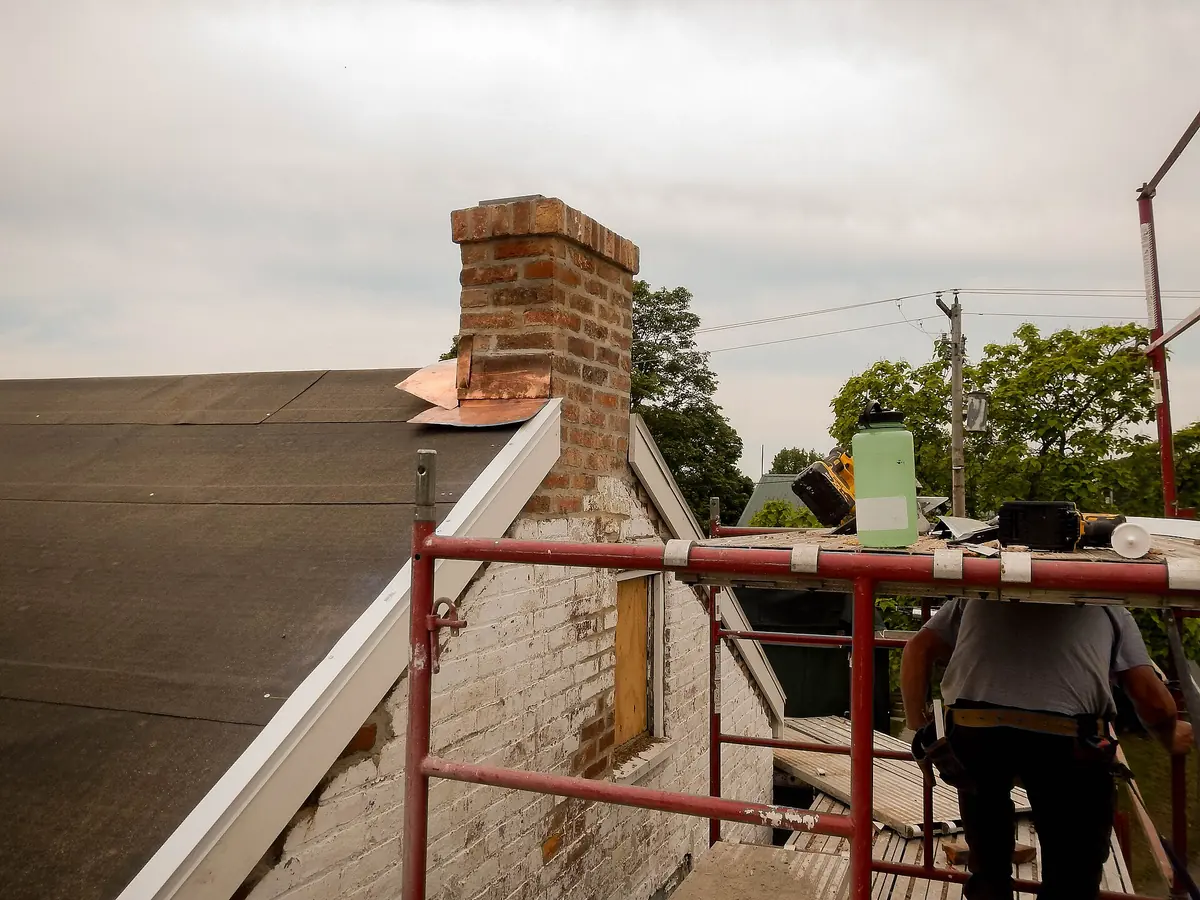
Flashing repair runs $300 to $700 in this county depending on the roof. Flashing is the metal where the chimney passes through the roof, and it is the most common source of a leak that people blame on the chimney. If you have a water stain on a ceiling near the stack, flashing is the first suspect, not the flue.
Note that flashing is genuinely a shared boundary between chimney work and roofing, and a good contractor will tell you honestly if it is a roofer's job. If your roof is near the end of its life anyway, doing flashing separately is money you spend twice.
What does a chimney liner cost?
A full-height stainless liner runs $2,200 to $5,000 depending on stack height, offsets, and whether it gets insulated. That is the biggest number on this page, and it is almost always the consequence of something smaller left alone: a missing cap that let water in, a chimney fire that cracked the tiles, or an appliance that was never matched to the flue.
The liner is the flue's inner surface, and it is what stands between combustion gas and your framing. Clay tile in older masonry, stainless in anything modern or relined.
That last one is worth calling out because it is everywhere in this county. A lot of houses here had a wood stove dropped into an existing masonry fireplace in the eighties or nineties without relining the flue to match the stove. The flue is far too big for the appliance, the gas cools before it exits, and the thing glazes up every single season no matter how carefully the owner burns. If you are fighting creosote every year and doing everything right, an undersized appliance in an oversized flue is the likely reason, and relining fixes the cause rather than the symptom.
Fighting creosote every season despite burning dry wood? Worth a look at the liner.
Masonry and tuckpointing
Mortar joints erode. On an exterior stack taking weather on the north side, they erode faster. Repointing the top few courses is routine maintenance and runs a few hundred dollars. Letting it go until the brick itself is spalling and the stack is leaning is a rebuild, and rebuilds start in the thousands.
Older Placerville houses in particular have stacks that have been through a century of settling. Some movement is normal and cosmetic. Movement that has opened a joint you can see daylight through is not, and it is a Level 2 inspection question rather than a guess from the ground.
What is urgent and what can wait
Not everything found on an inspection needs doing this month. Rough triage:
| Finding | Urgency |
|---|---|
| Cracked flue tile, gas reaching framing | Do not burn. Fix now. |
| Stage three creosote glaze | Do not burn. Fix before the season. |
| Missing spark arrestor | Before fire season, and it is cheap |
| Missing or rusted-through cap | Before the wet season. Water is the cause of most else. |
| Hairline crown cracks | This year. Seal now or repour later. |
| Flashing leak | Before the wet season |
| Eroded mortar joints, top courses | Next year is usually fine |
| Cosmetic staining or efflorescence | Watch it. Often a symptom of the cap. |
Notice how much of that list traces back to water and to the cap. Get the top of the chimney right and most of the expensive problems never start.
Repair questions
Do I need an inspection before a repair quote?
For anything beyond a cap swap, yes. Quoting a crown or a liner without seeing the flue on camera is guessing, and the number will change once someone is actually up there. See the inspection page.
My chimney leaks when it rains. Is that the flue?
Usually not. In order of likelihood it is the flashing, the crown, or a missing cap. All three are cheaper than a liner, which is the good news. Get it looked at before the wet season rather than during it.
Can I just not use the fireplace instead of fixing it?
For flue problems, sure, an unused flue is not a fire risk. But caps, crowns, and flashing keep water out of your house whether you burn or not, and a failed crown will damage the structure regardless. Those are building maintenance, not fireplace maintenance.
Is a chimney rebuild ever worth it?
Sometimes, on a house where the fireplace is a real feature. Often the honest answer is a stainless liner and a good cap instead, or capping the flue permanently if nobody has burned in it since 2003. A contractor who leads with a rebuild before showing you camera footage is one to be careful with.
How long do repairs take?
A cap or arrestor is one visit, often the same one as the sweep. A crown seal is a day. A repour or a liner is one to two days, weather permitting, and nobody is doing crown work in January up at elevation. That is another argument for handling this in late summer.
Get a repair quote from a licensed local chimney contractor.