Service
Wood stove and insert service in El Dorado County
A wood stove or a fireplace insert is not an open fireplace with a door on it, and servicing one is a different job. The appliance has to come apart, the liner gets swept separately, and the baffle and any catalyst have to come out and go back correctly. Budget $220 to $350 rather than the $180 to $280 an open fireplace runs. Call to get connected with a licensed local chimney contractor.
Above about 2,500 feet in this county, stoves and inserts are the normal case rather than the exception, because people up there are heating with wood rather than enjoying a fire. That changes everything about how the system gets used and how fast it fouls.
Heating with wood this winter? Get the stove serviced before October.
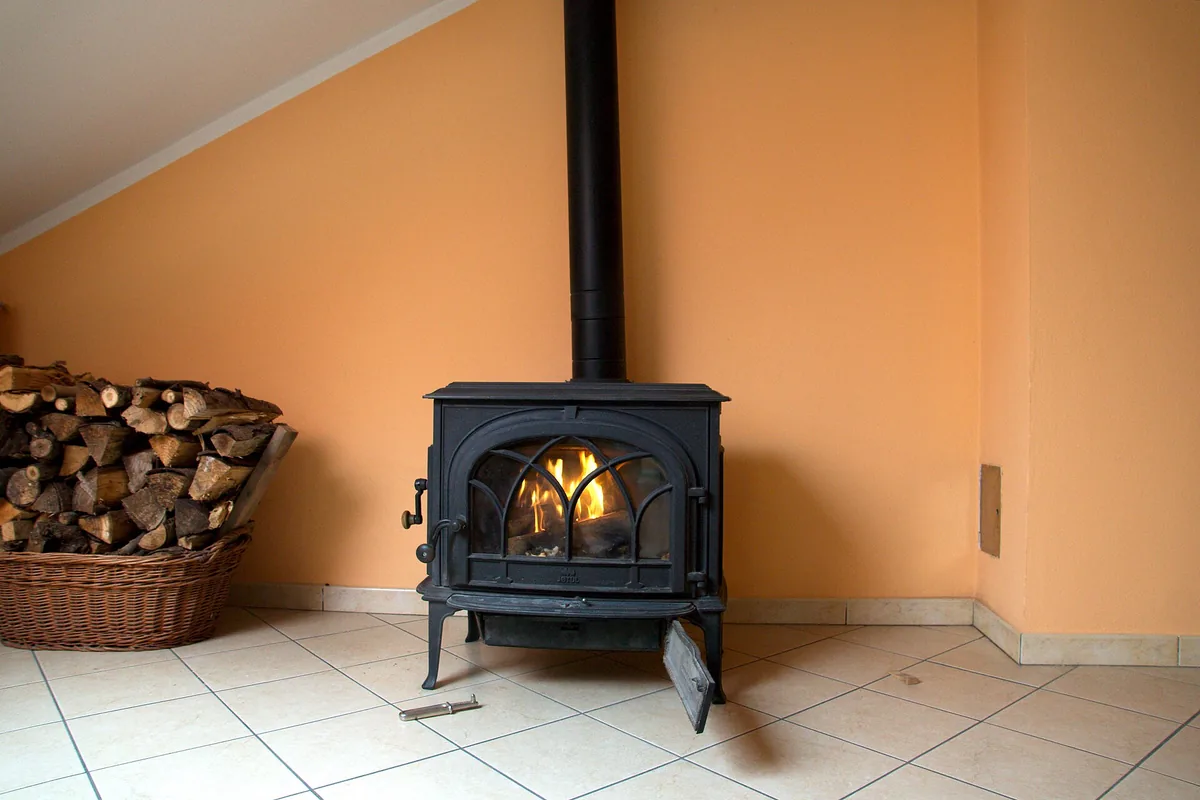
Why a stove costs more to service than a fireplace
An open fireplace is a hole with a flue over it. Brushing it is straightforward. A stove is a sealed appliance engineered to burn slowly and extract heat, and everything that makes it efficient also makes it harder to clean.
- The baffle comes out. The plate at the top of the firebox that forces gas to travel further before leaving. It traps ash and it has to be removed to reach the flue collar. On some stoves that is two bolts. On others it is a wrestling match with firebrick.
- The catalyst, if you have one. Catalytic stoves run a combustor that burns off smoke at a lower temperature. It gets inspected, cleaned gently, and put back. A cracked or plugged combustor kills efficiency and most owners never know until someone looks.
- The liner, not the chimney. Most stoves vent through a stainless liner run up inside the old masonry flue. That liner gets swept with a poly brush, not wire, because wire scores stainless.
- Gaskets and glass. Door and glass gaskets flatten over time. A stove that will not hold a low burn is usually a gasket problem, and it is cheap to fix and easy to miss.
- Reassembly matters. A baffle put back wrong changes the gas path, and the stove will run badly all winter with nobody able to explain why.
That is the extra hour, and that is the price difference. It is not an upsell.
The oversized flue problem
This is the most common thing wrong with stoves in this county and almost nobody knows it is their problem.
A lot of houses here had a wood stove or an insert dropped into an existing masonry fireplace in the eighties or nineties, and the flue was never relined to match the appliance. So you have a stove designed to vent through a six inch pipe venting into a flue built for an open fireplace, maybe 12 by 12 inches of clay tile. The gas has too much room. It slows, it cools, and it condenses on the walls as creosote before it ever reaches the top.
The symptom is unmistakable once you know it: you burn seasoned wood, you burn it hot, you do everything right, and the flue still glazes up every single season. If that is you, the problem is not your technique. It is that the appliance and the flue were never matched. Relining with a properly sized stainless liner fixes the cause. See the repair page for what that involves.
Burning at elevation, and why it is different
If you are heating a house in Pollock Pines or Camino through a real winter, your stove runs for months, not evenings. That means more total fuel, more hours of low overnight burns, and a flue that spends December cold on the outside. Every one of those pushes deposits up.
The overnight burn is the specific culprit. Damping a stove down to hold coals until morning is how you heat a house without getting up at 3am, and it is also the lowest, coolest, smokiest way to burn. It is not wrong. It is just a deposit generator, and it is why houses that heat with wood need more service than houses that burn on weekends.
The wood matters as much. Most people up here burn what came off the property: pine, cedar, fir, some oak. Softwood is completely fine if it is genuinely dry, meaning cut and split and stacked under cover for a full year or more. Wood cut last spring for this winter is not dry, and wet wood at a low burn is the fastest way to a glazed flue there is. If you split a round and the face is cool to the touch and the bark is tight, it is not ready.
Pellet stoves
Pellet stoves are a different animal and worth mentioning because there are a lot of them here. They burn cleaner and produce far less creosote, but they have a blower, an auger, a burn pot, and heat exchanger passages that all pack with fly ash. They need annual service just as much, it is just mechanical service rather than sweeping. Ask specifically about pellet experience when you book, because not every chimney contractor does them.
Stove glazing up every year despite dry wood? Ask about the liner size.
Signs your stove needs attention
- It will not hold a low burn overnight and used to. Usually door or glass gaskets.
- Glass sooting up fast. Wet wood, or air wash not working, or burning too low.
- Smoke into the room when you open the door. Draft problem. Could be a blocked flue, could be a cold start issue, could be the flue size.
- Less heat for the same wood. Plugged catalyst or an ash-packed heat exchanger.
- A stove that used to burn clean and now does not. Something changed. Usually the wood supply, sometimes the flue.
What service includes
A stove or insert service normally covers the appliance teardown and reassembly, sweeping the liner top to bottom, cleaning the firebox and baffle, inspecting the catalyst if fitted, checking door and glass gaskets, and a Level 1 visual check of the whole system including the cap and spark arrestor from the roof. Gaskets and parts are extra, but they are inexpensive and worth doing while the stove is already apart.
If you are buying or selling a house with a stove, you want a Level 2 rather than a service. See the inspection page. Full pricing across all of this is on the cost page.
Wood stove questions
How often does a wood stove need cleaning?
Once a year minimum if it is your heat. If you are above 3,000 feet burning your own wood on overnight burns, plan on annual service plus a mid-season look. It is not that stoves are fragile, it is that heavy use plus a cold flue plus imperfect wood is a lot of deposit.
Can I clean the stove myself and just have the flue done?
You can absolutely ash it out and clean the glass, and you should. The parts worth paying for are the baffle teardown, the liner sweep, and somebody who can tell you whether what is in there is stage two or stage three.
Is my insert supposed to have a liner?
Yes, and a properly sized one. If your insert vents into an open masonry flue with no liner, that is the oversized flue problem described above, and it is the reason it glazes. Worth a camera look to confirm before spending anything.
What is the best wood to burn here?
Dry wood. Genuinely, that matters ten times more than species. Oak is denser and burns longer, so it is worth more per cord, but well seasoned pine beats badly seasoned oak every time. Cut and split a full year ahead, stack it off the ground with the top covered and the sides open, and you have solved most of your creosote problem for free.
Do the contractors service pellet stoves?
Some do, some do not. Say so when you call so you get matched with someone who does rather than someone who will look at it and shrug.
Book stove or insert service with a licensed local contractor.